Showing posts with label Don. Show all posts

Friday, February 18, 2011

Look at your fish! Look at the world!

"The moment one gives close attention to any thing, even a blade of grass it becomes a mysterious, awesome, indescribably magnificent world in itself."
- Henry Miller
Today's entry has to do with looking, really looking, at the natural and human world. I hope it will bring a bit of attention to beauty and intrigue too many of us are missing. I'm tempted to say we're doing that less because of the pressures of this modern world, but I that may be jumping to an unfounded conclusion. We pay attention to what's relevant to us, or what we perceive as relevant to us, and I expect that has always been true. Certainly industrial workers confined to industrial cities have been missing connection to the natural world for generations.

Before going further, I should point to why paying attention to the world around us is relevant to understanding climate. The primary connection is that you don't recognize change if you don't know what a place, a thing, a person, or a climate is like at some earlier time. I've written before about getting to know what your climate is like in a visceral way. As we spend more and more time in climate conditioned spaces we lose touch with our environment and our climate. This is another prod to keep or rebuild that connection.

This modern world allows us to move from climate-conditioned space to climate-conditioned space by way of moving climate-condition spaces. Your GPS allows you to get from point A to point B without paying a whole lot of attention to where you are and what's around you. Attention to landmarks has suddenly become unnecessary as we move about in vehicles that create uniform climates around us. It's great, of course, but it also has its costs. You can use your GPS as a mentor for learning the lay of the land. Or you can use it to ignore the lay of the land.

What do you do to give more attention to your environment? First, remember to do it. That might lead you to walking and biking more and driving less. That's got pluses besides bringing you more in touch with your environment of course. Then, stop and smell the roses. And draw the roses.
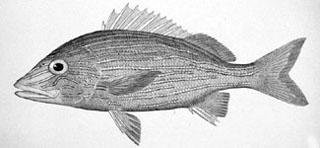
Hæmulon elegans, NOAA, Drawing by H. L. Todd


One of my favorite essays describes Louis Agassiz's approach to teaching. Agassiz was the first to present a scientific case for an ice age (and a direct opponent to much of Darwin's work). In the Laboratory with Agassiz, also known as Look at Your Fish! by Samuel H. Scudder, tells the tale of Scudder's first encounter with his mentor Agassiz. And, of Scudder looking at his fish long and hard:
Half an hour passes—an hour—another hour; the fish began to look loathsome. ...
...At last a happy thought struck me—I would draw the fish; and now with surprise I began to discover new features in the creature. Just then the Professor returned.
"That is right," said he; "a pencil is one of the best of eyes. I am glad to notice, too, that you keep your specimen wet, and your bottle corked."
With these encouraging words, he added, "Well, what is it like?"
Scudder gave his reply in terms of what he had seen in his first hours with the fish. Agassiz listened and replied:
"You have not looked very carefully; why," he continued more earnestly, "you haven't even seen one of the most conspicuous features of the animal, which is a plainly before your eyes as the fish itself; look again, look again!" and he left me to my misery.
The tale continues, unearthing how Scudder learned to see more and more about the fish. And about looking.

Of course, I'm partly urging you to go and look with your pencil, but more importantly, I'm just asking you to really, really look. There is so much awe-inspiring stuff in this world that we miss as we rush through it. And, unfortunately, we think much of that beautiful stuff is being flushed away, so we should enjoy it while we can.

And, if you went right past the first link above, it's a powerful example of how we blow by beauty in our rush from point A to point B. Here's virtuoso violinist Joshua Bell playing his Stradivarius in a Washington, DC Metro station and essentially being completely ignored:


Go forth and pay attention!

Saturday, February 12, 2011

Gaining Hope

This week's events in Egypt give us hope. I have hope for the end of repression both within Egypt and throughout the region. And I have regained some hope for the power of the people. No one knows where it will end, but these events clearly show that if enough people get excited enough and angry enough and connected enough, they can make a difference.


Sometimes I/we lose sight of that fact. 


And, I for one, didn't see it coming.


Wow.

What lessons can take from the last three weeks with Egypt on the world stage? Well, I'm no political scientist, but that won't stop me from speculating. And I welcome corrections and clarifications.

  1. It seemingly happened overnight, but it really didn't. The issues have been simmering for decades. Somehow, a tipping point was reached. 
  2. Communication technologies helped. Twitter, Facebook, youtube and Al Jazeera all clearly mattered and none of them alone were likely sufficient.
  3. People got off their butts and into the streets. And onto Facebook, Twitter, Al Jazeera and such. Simmering anger alone doesn't do much. Communicating alone does a bit more. 
  4. Most of the participants didn't do a lot of planning. But my guess is that a few people did more than we have a sense of.
How does that translate to understanding climate? From the Essential Principles of Climate Science:
Guiding Principle for Informed Climate Decision: Humans can take actions to reduce climate change and its impacts.
What are those actions? They surely vary tremendously in their nature, but it does seem like we ought to be able from Egypt. What do you think?

And, please: Keep hope alive.

Wednesday, February 2, 2011

Where to focus climate change education efforts?

I virtually sat in on a bit of the Climate Change Education Roundtable Committee Meeting #2 this afternoon. There was some fascinating discussion that I caught only the tale end of, then it moved into discussions of what to focus the next workshop upon.

There was a resounding endorsement of focusing that upcoming workshop on climate change education at the K-12, or K-16 level. That simultaneously cheered and depressed me.

It cheered me because it's a profoundly important audience -- an audience where the understandings (or misunderstandings) built will have the longest-lasting effect. There's also the possibility of education that trickles up. Kids really do teach their parents important things some of the time.

But I'm also concerned for the very simple reason that K-12 or K-16 education has never worked very well for getting a lot of people to understand important ideas. I want you to pay attention to this point, so I'll inset it and make it bold.
There are no examples of creating a thick description of what everyone should understand about any topic that has led to wide swaths of the population understanding the target content, in spite of countless attempts to do just that throughout human history.

Pretty bold, huh?

Not a single example.

That begs for us to do something different. Pleads for it. Cries for it. Screams for it. 

I did raise the issue and it was politely received. Then the next several speakers talked about their agreement of the need to focus on K-12 education. 

Yes, this next workshop should focus on the young, as the last one focused upon a variety of adult audiences. But, and this is a really big but, we need to attend to the fact that we've just not been successful in teaching much more than basic literacy to a majority through schooling (or any other approach, really). 

Ok, that's a bit of a simplification. Most folks do know some important things and they learned it somewhere. Hygiene, for example. And, most people understand that smoking is bad for you. But only a minority have good understandings of things like the workings of our constitutional democracy, or evolution, or trigonometry, or, well, I could go on and on about the things that almost everyone has been taught that only a slim minority of the population understands. 

Wow, does that sound elitist. 

How would you do on the 

But really, how would you do on the NAEP test? Or, if you're understandably not a fan of standardized tests, how would you demonstrate your understandings across the traditional high school content areas? To make myself sound less elitist, I'll note that I was too chicken to try any areas outside of science. Or, I mean, I haven't had time yet.

And now back to our message:

As we work on the agenda of educating young people about climate change, we need to constantly ask ourselves:
 What is it that makes this approach more likely to succeed than what we've done before?
If we can't answer that question, we need to pull back and take a different tack. 

Our in the box thinking leaves us sitting in the same old box. How are you stepping out of the box? What should we do to make K-12 climate change education effective?

The views expressed herein are those of the author, Don Duggan-Haas, and do not necessarily reflect the views of the Paleontological Research Institution.

Thursday, January 27, 2011

Making the Case as Simply as I Can

In the last several months, I've thought a lot about the need to complexify the seemingly simple. Obviously, I think that's too often overlooked, but I don't want to forget the need to cut to the chase. That's what this entry is about.

What is the simplest scientific case that can be made for the fact that humans are changing the climate?

Understanding two indisputable facts and knowing some grade school-level vocabulary makes a very compelling case. That's just three simple things.

Simple Thing #1:
I'll start with the grade school vocabulary. You need to know the difference between weather and climate. Weather is about the state of the atmosphere with regards to temperature, moisture and wind at a given time in a given place. Climate is the weather over a long period of time; typically on a scale that is at least decades long. Knowing what the weather is tells you what clothes to wear today. Knowing what the climate is tells you what clothes you should own.

Oh, and you should understand the meaning of the word "global."

It may be cold in Washington this winter. That's the weather. And it's not global.


Simple Thing #2 (a.k.a., Simple Fact #1):
Carbon dioxide and other greenhouse gases absorb heat in the atmosphere and make it warm up. We can demonstrate that very, very easily in the laboratory.


Get yourself a seltzer bottle and try it at home. It really is that simple. I'd be more inclined to put the jars in a sunny spot than to use the lights, but it will work either way. 

Of course, you'd be right to note that the concentration of carbon dioxide in the jar is considerably more than that of the atmosphere. Indeed. But, hello! The atmosphere is miles thick -- it's a heck of a lot bigger than that jar. And Earth is blanketed by all those miles of atmosphere that trap heat in.

Simple Thing #3 (a.k.a., Simple Fact #2):
Each and everyone of us (assuming that us means folks who are sitting in comfortable homes or offices while the chill of winter is outside our walls and that we've been in some sort of vehicle in the last few days) is adding ton after ton after ton of carbon dioxide to the atmosphere. 

Really. Tons and tons. If you burned 10 gallons of gas in the last week or two, the stuff didn't just go away. You turned about 60 pounds of gasoline into about 180 pounds of carbon dioxide. Add to that the fuel to heat your house, to make and transport the things you own and have consumed, build your roads and other infrastructure, and to move your military about and have them do their (our?) business and pretty soon it adds up to lots and lots of carbon dioxide. 

And there are hundreds of millions of us living this lifestyle and billions more who aspire to it.

(To refresh your memory on how burning stuff creates more weight of carbon dioxide than the weight of the stuff you started with, take a look back to this post with its nifty animations.) 

There's more to it...
Of course you can get complicated pretty quickly, and to really understand climate change you need to read and understand more than the few paragraphs I've put together here. But the above really is beyond dispute. And understanding the above makes it very, very difficult to dispute that the stuff we humans are (and have been) up to is changing how the atmosphere works in ways that are making the planet heat up. 

That's it: two little facts and a bit of grade school vocabulary. Is it simple enough for you? 

Wednesday, January 19, 2011

A sampling of things I listen to on my morning commute

As a telecommuter, I have a loop-shaped morning commute.  I take a walk to wake me up, keep me from becoming even tubbier, see the world and listen to podcasts.  What podcasts?  They vary across a range of topics that my brain sees as connected to the social and natural world and how people learn about that stuff.  That's nice and narrow, isn't it?

Sometimes I end up listening to just one particular episode from a series as I'm looking for a particular author talking about her or his book, but most of the time I listen to regularly podcasted programs.  In this post, I'll give attention to both categories -- the ones I listen to regularly and one "special" episode.  And I'll give you a sentence or two about why I like them. 

I'd thought about listing a bunch, but today I'll just do a few with the intention of coming back to the topic with additions when the mood strikes.  


I'M A REGULAR LISTENER TO THESE PODCASTS:
None of these are focused exclusively on climate change, though many have the occasional (or, in the case of the first and third, frequent) program dedicated to it.  The links typically will take you to the show's homepage.  You can generally find a link to subscribe there, or type or paste the name into iTunes search box.
The Long Now Foundation's monthly Seminars were started in 02003 to build a compelling body of ideas about long-term thinking; to help nudge civilization toward our goal of making long-term thinking automatic and common instead of difficult and rare.

  • Ideas: How to Think About Science (from CBC Radio) This series gives a good overview of thinkers in the nature of science.  It's a few years old now, and it's been a while since I listened to it, but it's a good course to stick in your pocket.  How to Think About Science is really a subset of their Ideas program, which is also quite good.
The Canadian Broadcasting Company has perhaps as rich an array of good podcasts as NPR, and I live within broadcast range to catch some of it over the air.  In fact, as I looked at CBC's podcast page (the previous link), I saw a new one which I'll just go ahead and add a new bullet for:

  • The Bottom Line, with David Suzuki (from CBC Radio)  As noted above, I just stumbled across this (it's new!), but I've never been disappointed with David Suzuki's work.  He's the pre-eminent Canadian environmental journalist.  Wouldn't it be nice if the US had one of those?  Or a few that you had to choose amongst?  Ah well, at least we can listen to Suzuki's fine work more easily in this digital age.  
Here's an episode description to whet your appetite: "David Suzuki goes camping in Haida Gwaai with former Minister Jim Prentice. They discuss the root of the word economics and climate change. David also interviews the former chief economist of the World Bank about the cost of climate change."  There's my morning commute for tomorrow.

  • Radiolab (from WNYC) Radiolab is just a delight.  The way the hosts play with ideas and bring life to science is hard to top.  Here's a blurb from a show a couple of years ago, Stochasticity, that I really liked:
"Stochasticity (a wonderfully slippery and smarty-pants word for randomness), may be at the very foundation of our lives. To understand how big a role it plays, we look at chance and patterns in sports, lottery tickets, and even the cells in our own body. Along the way, we talk to a woman suddenly consumed by a frenzied gambling addiction, meet two friends whose meeting seems to defy pure chance, and take a close look at some very noisy bacteria."

And, of course:

  • TED  My guess is you already know about this, but if not, follow the link and be prepared to surrender some time to some great talks.   I'll also note that I'm pleased that TEDx Buffalo is coming April 7, 2011.  TEDx are locally organized TED Conferences.  I'm kind of excited about it...


HERE IS AN INTERESTING "SPECIAL EPISODE" PODCAST:
Click on the episode name to get to the identified special episode.  Clicking on the podcast name will take you to the series site.
  • This American Life: Kid Politics (from Chicago Public Media)  This episode of one of the most popular podcasts that there is includes a segment on climate change understanding and the resistance to changing one's mind.  It's fascinating.  And it's got a dash of extra coolness because I know Roberta Johnson a little.

Wednesday, January 12, 2011

Geologic Now ≠ Human Now. And, Baby it's Hot Outside.

I started writing this before today's announcement from NOAA that 2010 tied for the warmest year on record.  My original text was funnier, based on predictions that a cool December bumped it out of the top spot.  Ah well.

2010 didn't set a new record for the hottest year in human history.  2010 tied 2005 for the warmest year.   I guess global warming has stopped.  Whew.  I'm so glad we can relax now.  Not.

Pardon the linguistic structure I used to the irritation of many while I was a teenager.

2005 stands as the warmest year ever.  Does that mean global warming is over?  Um, well, no.  With today's announcement, I guess I need to change the highlighted sentence.  I hate it when reality deflates my rhetorical shenanigans.  Let me try again.

2010 wasn't the hottest year ever.  Does that mean global warming has reached it's peak?  Um, well.  It kind of was just as warm as the warmest year ever, so probably not. See?  That's just not as provocative.  Darn it.  And, baby it's hot outside.

Baby, it's hot outside.


But, if the globe is warming, shouldn't every year be hotter than the last?  Shouldn't every day be hotter than the last?  Every second?

December was cool (and, hey, it's pretty cold out now where I am) so maybe we've turned a corner!  Well, no.

The human now referenced in the title of this post occurs during the geologic now.  But the geologic now lasts a lot longer than the human now.  The Long Now Foundation does things to help us understand this (and produces really interesting podcasts).  They're building the 10,000 Year Clock to help drive the message home.  This relates too to the issue I raised a few weeks ago about how I'm not particularly concerned with saving the Earth.

So, the "Baby it's hot outside" line isn't about the human now.  It's about the geologic now.

Today isn't the hottest day ever.  Does that mean we're cooling off?  I think most of us think that's a silly question.  At what scale does it stop being silly? Last month wasn't the hottest December ever.  Does that mean we're cooling off?  Last year may or may not be the warmest year on record.  Does that mean we're cooling off?

The last decade was the warmest decade in a few million years.  Does that mean we're heating up?  That might well be the same kind of error (but in the opposite direction) that I've tried to caution against in the last paragraph.

Is it a mistaken claim?  How do we decide?

There are lots of issues to consider.  Here they are a few stated very briefly followed by short explanations:
  • If we chose a different date to start the year, the warmest year on record would have been last year.  January 1st starts the year by the historic agreement of a bunch of humans, not because something in nature says so.  If we chose a different starting date for the year, we have a couple of different year-long periods that were the warmest on record globally in the immediate past.  The warmest 12 months on record and the warmest "meteorologic year" (November to November) both occurred in 12 month periods bridging 2009 and 2010.  
  • A year is but a blip.  That's part of the point of this post.  Looking at one year tells you something, but with the context of history, it tells you a lot more.  Here's looking back to 1880:
Oh, Baby It's Hot Outside.
----------------------------------------

And going back over a millennia: 


I, Like, Really Mean It.  Baby It's Hot Outside!


  • Human history is but a blip.  I'm not worried about global temperatures soaring to the warmest temperatures in geologic history, and therefore don't feel the need (or have the time) to go further back in time.  I will note that the temperature has varied quite a bit over the 4.5 billion years of Earth history.  Right now (in both the human and geologic sense) humanity is at the end of the timeline.  And, on most scales, humanity is just a blip on scales where you can envision the depth of geologic time.  Humanity -- modern humans; homo sapiens -- have only been around for a couple hundred thousand years.  Pause and think about how big a billion really is -- it's a thousand millions; and a million is a thousand thousands.  4.5 billion -- the age of Earth is a whoppingly large number.  Blip.  I tell you: Blip.
I've got no real idea if, when some sentient beings billions of years in the future, look back at Earth's history they will see humanity as just a blip.  And I don't want to get all mushy or philosophical about it.

What I do know is this: Baby, it's hot outside!  (Geologically speaking).

Wednesday, December 29, 2010

A New Decade's Resolution

A note before we begin:
Some will argue whether or not the new decade is already underway.  I really don't care very much, but am casting my lot with it starting in a couple of days so I've got a better rhetorical gimmick.  And I know there was no Year 0.

The meat of the thing:
I'll start off by noting that I'm typically not a New Year's resolution kind of guy.  There's only been one resolution in my life that I've been pretty good about: Drink beer from a glass whenever practical.  You get to taste it more fully that way.

Maybe my problem with the whole resolution idea is that, as an Earth science kind of guy, the scale's too short.  But, the New Year is a good opportunity to reflect on the past and plan for the future and the New Decade seems like an even better opportunity.  Is it ten times better?  I'm not sure about that, but you may have noticed a theme in across many posts about difficulties associated with thinking in the longer term.

If you want to refresh your memory, or if you're just tuning in, see the posts that made analogies between thinking about climate change and thinking about issues of public health (especially smoking) and between climate change planning and planning for retirement.  Last week's post on where weight goes when you lose it touches on it too.  In fact, so does the post on using your Christmas tree to teach about carbon.  All of that deals, at least in part, with thinking beyond tomorrow or next week, and is intended to foster deeper understanding of the Long Now.

To understand climate and climate change, you need to have a grasp of things that take years, decades, centuries or millennia to play out.  Or longer.  Really.

I learned of this video on Andy Revkin's dotearth blog.

This is where having thought about and taught about the history of the Earth and Universe comes in handy.  With the Earth having an age of about 4.5 billion years and the Universe a few times older than that, what happens in the course of a single year doesn't usually amount to much in the grand scheme of things.

For some things, of course a year or a decade is a long time.  I am the father of a nine- and a six-year-old, after all.  A decade's made a huge difference in my life.  But to the Earth me and mine are just a blip.  And so are you.

Humanity, to the Earth, is just a blip as well, but we're a blip that's been important, especially in the time since we figured out how to get stuff out of the ground and burn it to give us power to do stuff.  We've changed the face of the Earth profoundly.  And that idea brings me back to the point of the entry -- to set a New Decade resolution.

Here it is:  By the decade's end (12/31/20) I resolve to make an evidence-based case that the carbon footprint of myself and my immediate family will be negative.  


How will I/we do that?  I'm not exactly sure, but it will certainly involve educating folks and institutions about how to reduce their carbon footprints.  And, deciding what's a reasonable cut for me to take of their cut.  Can I engage people in the Low Carbon Diet, and claim 1% of their reductions, for example?  If I come up with great ideas and post them here, or convey someone else's great idea to the readership of this blog that help people reduce their emissions, maybe than can let me know and I can take just a bit of credit for it.

And it will certainly involve reducing emissions for my household and my lifestyle.  It is easier, obviously, to cancel out a small set of climate impacts than a big set of climate impacts.  Right now, in spite of thinking about this stuff nearly all the time, I still have way too big a footprint myself.  That's highlighted by my travel.  In 2010, I've traveled to Chicago, Philadelphia, San Antonio, Smoky Mountain National Park (Tennessee & North Carolina), Monroe, MI, Victoria (British Columbia), and many trips within New York State.  One can't do all that travel without having a pretty big footprint, though I've done things on some of those trips to reduce it like carpooling and taking the train where practical.  We've done a fair amount to reduce household impacts -- Energy Star appliances, CFLs, and, more importantly, it's a fairly small house that's close to where we work (really close as I work in my home).

And, what do I mean when I say "evidence-based case?"  What I mean is that I want my claim to stand up to reasonable review.  I want to point to evidence that's compelling.  I welcome your help in figuring out what that is.

I think it's a pretty lofty goal, but my track record's not bad.  I still usually drink my beer from a glass, you know, and I think I made that resolution about a decade ago.

Thursday, December 9, 2010

A tree in the living room as an opportunity to teach about carbon

Don and his tree.

I've got a tree in my living room.  It stands a little over seven feet tall, though it was probably closer to eight feet when it stood at the Christmas tree farm out in Clarence.  I was easily able to lift it onto the roof of the car, so I'm guessing it weighs less than 40 pounds.  You might have a tree kind of like it in your living room.  You might use that tree to help you and yours think a bit about carbon.  

Perhaps it could be a little fodder for making those family get-togethers a little more uncomfortable, but please be nice as you nurture understanding along.  Fortunately for me, holiday discussions in my family are decidedly geeky -- the most notable in recent memory had to with which one of my siblings had the greatest volume to surface area ratio.

But I digress.  Let's think about that tree.

A favorite question of mine is, "What's the raw material for a tree?"  It started as a little seed within a pine cone and now some eight or ten years later, it weighs in at about 40 pounds.  Where did those 40 pounds come from?  What did the "stuff" of the tree used to be?

Here's a picture of the tree cookie I cut off after I brought it home.  How old is it?  
The earbuds are included for scale.  It's not really a very big tree.

Lots and lots of people will answer the raw material question with something like, "It comes from the minerals in the soil."  Does that make sense?  What if that were true?  For one thing, it would mean that soil and trees are made of the same stuff.  Is that the case?  Living things are carbon-based.  Is soil carbon-rich?  

Um, no.  Not so much.  

And, if trees got their mass from the soil, wouldn't that mean that really big trees would need to be surrounded by really big pits where they pulled that mass from?  Those holes in the ground would grow over time.  Have you ever seen that?  I haven't but it would make for more interesting walks in the woods.  

Darn near every adult in the country took high school biology and was taught about photosynthesis.  We all learned that plants take in carbon-dioxide and release oxygen.  Then we forgot, or we never really understood it in the first place.  If we stop and think about it, and we remember that life is carbon-based, it ought to give us a little pause -- trees are made out of air!  That is, of course why, as many of you dear readers already know, that planting trees is a way to offset carbon emissions.  

If you already knew that, good for you.  Know that you've got at least a somewhat deeper understanding than the average American.  That's not surprising since you spend at least some of your time reading blog posts about climate change.  

But have you thought about what that 40ish pound tree implies about the scale of tree-planting needed for offsetting emissions?  I wrote a guest post before I was regular here on that in 2009.  I won't repeat that post here, but I'll briefly hit some relevant highlights.  Ten gallons of gasoline weighs about 60 pounds.  If you're burning 10 gallons of gasoline a week, you're releasing about three times that much carbon dioxide as the carbon in the gasoline combines with oxygen in the air to make CO2.  So, a typical driver might release 180 pounds of CO2 a week just by driving.  Photosynthesis does something like a reversal of that process.  Photosynthesis, in other words, can take 180 pounds of CO2 and turn it into something like 60 pounds of tree and 120 pounds of oxygen.  

Now it's time to remember that the 40ish pound tree in your living room is probably eight or ten years old.  So, it doesn't offset a typical driver's week of emissions.  Planting a tree is a good thing to do.  But planting a whole bunch is better.  A bunch of forests is more like what we need.  For each of us.  

Oh, we can't end a holiday post on such a downer.  Then again, maybe we can.  

Wednesday, December 1, 2010

Is climate too much of an abstraction?

[What is the] extinction of a condor to a 
child who has never seen a wren?
Naturalist Robert Michael Pyle
as quoted in Richard Louv's Last Child in the Woods


http://www.youtube.com/watch?v=qkWFZ_LlMiM


What is climate change to someone who never goes outside?
Something that came to Don's mind as he was reading 


I've been intermittently reading Louv's excellent book, finally.* I'm reading it intermittently partly because it's so depressing that I prefer it in small doses and partly because I'm a distractible boy who just reads books that way.

There's a great deal to ponder about "nature deficit disorder" and much more within its pages.

I read it with some special attention to how our growing detachment from nature contributes to the difficulties of climate change education. I also read Climate Change Literacy Won’t Be Enough, a blog post by David Ropeik this week. Ropeik's post addresses the recent report, “Americans' Knowledge of Climate Change” and notes how that report suggests that one of the reasons that we're not making more progress on climate action is ignorance. As the title of Ropeik's post portends, he doesn't think that's the only reason. Here's a bit of the post:


Some of the psychological characteristics that make a risk feel more or less threatening are common to us all. (This comes from the research of Paul Slovic and Baruch Fischhoff, among others). One of them is the subconscious question we instinctively ask ourselves about any possible danger; “Can it happen to ME?” If not, why worry? Can you name one way climate change might seriously, negatively impact your life in the next ten years? Most people, even the most dedicated environmentalists, can’t. Climate change doesn’t trigger the “ME” factor, so concern about it stays intellectual, and doesn’t hit us in the gut. You can see this in the “Americans' Knowledge” study. Sixty three percent of the respondents said they understand that global warming is real, and happening now, but only 16 percent say they are personally very worried. This mirrors the findings in most surveys of public opinion about climate change — concern about climate change is more broad than it is deep.

For most of us, climate change is an abstraction. I suspect for too many of us, climate itself is something of an abstraction.

As Louv so eloquently describes, we're not connected to nature in the way we once were. He focuses on childhood and, if you read the book (which you should), it will draw memories of your own childhood nature experience. For me, that includes work and play in the backyard tree fort and playing in the several different bits of woods I easily walked to from my childhood home. Some of those woods are gone now. They've become housing developments. The ones that remain don't see as many kids exploring them as fear of various things coupled with the draw of computers and video games keeps kids inside. And schools have less recess time, and more of that time is spent indoors, especially if the weather is very cold or hot. Wimps.

And, if people don't go outside very much, do they really have a deep, visceral knowledge of their own climate? If they don't go outside, do they really know what their climate feels like?

My gut says paying just a bit more attention to that as parents and teachers can be helpful. Watch the weather. Get your kids and yourself outside and talk about how the current weather compares to the typical weather for the time of year. Do this monthly and before too long, you'll build a deeper sense of what you're climate is really like.

Pay special attention to things that make your local climate different from other places. The video at the top of the post highlights one of the things that makes my (Buffalo, NY) climate famous or infamous.

The sky view is looking over the City of Buffalo from my home at the Town of Amherst line.

The time lapse video of lake effect snow from last winter shows one aspect of our climate. The ominous looking lake effect clouds are often visible low on the southern horizon when I look out my office window in late fall and early winter. They often just move like a conveyor belt parked to the south of me and my snowblower sits happily in the garage while folks just a few miles away get inundated. I laugh at them! Ha! Sometimes though, as in the video, those clouds move over me and stop my laughter.

The video was shot using Gawker for the Mac.

I'll note that we ought to also be known for our beautiful summers, where it only fairly rarely breaks 90 degrees F and the hottest day on record was 99 degrees.

What makes your climate special? Get out there and feel it!
-------------------
*Various folks I trust have been recommending that I read it since it came out, and I saw him speak a few years ago. It's about time I got around to it... You should get around to it too.


Wednesday, November 24, 2010

Teachers: An opportunity to join a learning community focused on climate change education

I (Don Duggan-Haas, your Wednesdaily Climate Change 101 Blogger), am part of a project that is bringing together teachers who want to work with one another to more effectively teach about climate change, its causes and its effects.  That's what today's post is about.  It's really intended as a recruitment tool for interested teachers, and I hope you either are one, or know someone who might be.


Climate change is perhaps the most important issue in our curricula, though its place within the curriculum is small.  Our students and people more generally commonly hold misconceptions about climate and climate change that are difficult to dispel. How can we be more effective in building our students' understandings of climate change and its implications?  

Would you like to talk about these issues with your colleagues, working together to share approaches in a group with access to peer-reviewed resources?

Climate change and its effects aren't limited to science, so this group isn't limited to science teachers.  

I am leading Lifelines for High School Climate Change Education for Western NY (I telecommute to Ithaca from Amherst).  There are groups doing this around the country, and I can connect you to those groups. There isn't yet a single website listing the different programs.  As the meetings are virtual, you don't actually need to be in the geographic region for the group, though there are advantages to being connected to other educators in your region.   

Here are the details:

Lifelines for High School Climate Change Education (LHSCCE) is a project to establish professional learning communities (PLCs) to share curriculum resources and best practices for teaching about climate change in grades 9–12. The PLCs meet either in-person or via telecon/webinar (tele-meetings), depending on local preferences, but in light of desire to reduce greenhouse gas emissions, tele-meetings are encouraged. This is a NASA-funded project organized by the Lawrence Hall of Science (LHS) at the University of California, Berkeley.

The program will fund 20 PLC groups across the United States.  Each PLC group will have a maximum of 15 members who will work together as a professional learning community over a period of two years.   Each PLC will have a leader who will facilitate and coordinate the group’s online sharing activities.  Teachers participating in a PLC will receive $100 each year.


Our group will meet on the first Monday of the month at 7:00 pm EST, beginning December 6, 2010.

PLC’s are open to high school teachers teaching in any subject area who wish to collaborate resources to incorporate climate change into their curriculum.

PLC’s are generally geographically located around the home-base of each PLC’s Leader.   However, location does not restrict which group a teacher may wish to apply to join.

If interested in applying to join the Western New York State group under the leadership of Don Duggan-Haas click on the link below to apply online:

                Lifelines for Western New York State Application


        Questions?   Contact Don: dugganhaas@museumoftheearth.org.


Wednesday, November 17, 2010

What can we learn from public health education initiatives?

A few weeks ago, I attended the fascinating Climate Change Education Roundtable meeting sponsored by the National Research Council's Board on Science Education.  A series of papers were commissioned for the meeting that give a picture of the diversity of approaches to climate change education discussed at the meeting.  There's some good stuff in those papers -- do give them a look.

One session at the meeting included discussion of what we can learn from successful public health campaigns, noting successful efforts that have substantially slowed the spread of sexually transmitted diseases (STDs) and decreased the number of unwanted pregnancies.  I'm pretty confident we can learn some things from that body of work, but the particular health campaigns used as examples probably aren't the best ones to look to.  I suggested as much at the meeting, making the connection to obesity.  Unfortunately, I'm a poster child for the failure of that public education campaign, and there are a great many fellow poster children out there.
Me, being fat in front of the White House.

And, unfortunately, I think this largely unsuccessful effort is a closer analog to climate change education.

If you're healthy and have unprotected sex tonight with an STD-infected partner, you've got a pretty strong chance of having that STD tomorrow.  If you're thin today and have an extra brownie after dinner, you're still thin tomorrow.  You have to keep up those bad behaviors for a while for it to make a noticeable difference.  Likewise, to undo the damage, you've got to drop those obesity-inducing bad habits and hopefully pick up some good ones and keep them going for a while to notice much difference.

That sounds a lot like the problems of climate change.  Buying a big house in the exurbs doesn't do much to the climate immediately, but add up the effects of a bunch of people over a bunch of years, and you've made a difference in the climate system.  And, as with obesity, figuring out what to do with that big house and killing your long commute won't make much of a difference tomorrow.  But it will eventually.

And, unfortunately, obesity prevention programming hasn't worked very well so far.

(As I type this, I'm telecommuting to a birthday party at work.  I don't think virtual cake is any part of the answer.  It's not very satisfying, and has me thinking of actual cake.)

We should keep watching those efforts and pay attention to what works and what fails to work, and we should look for other analogs.

How about smoking?  

Like climate change and obesity, the most serious effects of partaking in the activities that lead to big trouble don't get you in trouble right away.  And it takes a while to recover from the damage (if you can recover from the damage).  Unlike obesity and climate change, public education has actually decreased rates of smoking in the broad population.

What's worked in anti-smoking campaigns?  Importantly, it's not just one thing.  Smoke-free workplaces and public places, comprehensive advertising campaigns, increased taxation on tobacco and strong graphic warning labels on cigarette packages quickly reduce tobacco consumption.  Additionally, supporting smokers in the quitting process matters.  Counseling and pharmaceutical aids help, as do access to toll free support services.  Call 1-800-QUITNOW if you're looking for support in stopping smoking.  (See more about smoking reduction here).

Most of those strategies (and the idea of using many strategies simultaneously) are translatable to efforts to reduce carbon emissions.  Making places smoke-free is akin to regulating emissions, and perhaps more directly to making city centers automobile-free. Advertising campaigns are in existence on some scale already.  Taxation on carbon emissions is a direct analog.  Support lines are imaginable too.

Graphic warning labels is an interesting proposition.  The link above and here takes you to the proposed FDA graphic labels for cigarette packaging.  Ick.  But maybe it's an effective ick.  What would the greenhouse gas reduction parallel look like?  Graphics added to the price stickers on new cars?  Images of sea-level rise, famine, hurricanes, or drought printing out with your boarding pass?  And how about putting such stickers on fighter jets to discourage the government from making those purchases?  Hmm...

I don't know about that, and I don't know if we can come up with a pharmaceutical aid to help us wean of carbon emissions, but it does seem that are lessons that can be learned here.  What do you think?